
Growing cannabis indoors requires careful consideration of lighting options to achieve optimal yields and quality. The choice between LED, HPS, and CFL grow lights can significantly impact plant growth, energy costs, and overall success.
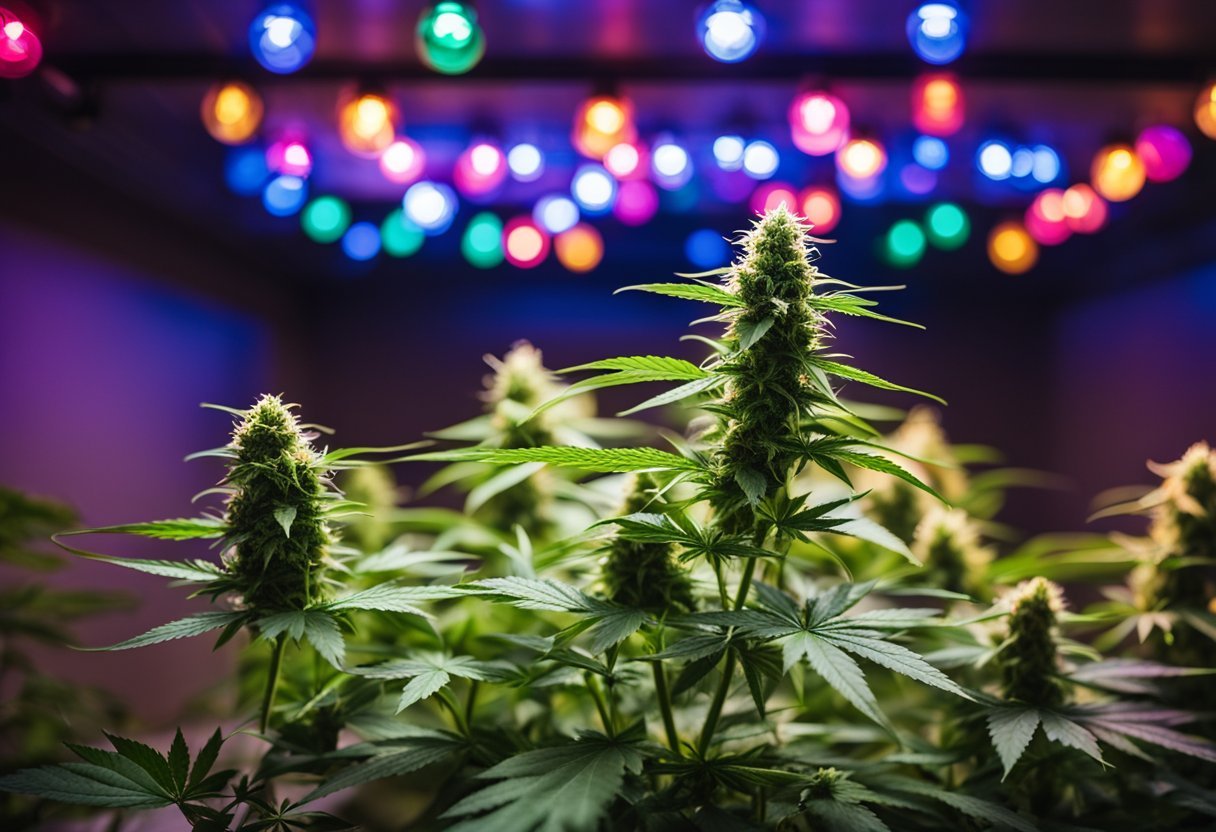
LED grow lights offer the most efficient and customizable spectrum of light for cannabis cultivation, while HPS provides intense light output, and CFL serves as an economical option for small grows. Each type of grow light comes with distinct advantages in terms of heat output, energy consumption, and initial investment.
Light selection directly affects the plant’s vegetative and flowering stages, making it crucial for growers to understand the specific benefits of each option. Modern LED technology has revolutionized indoor growing by providing targeted light spectrums that match cannabis plants’ specific needs throughout their life cycle.
Understanding Grow Lights and Cannabis Plant Requirements
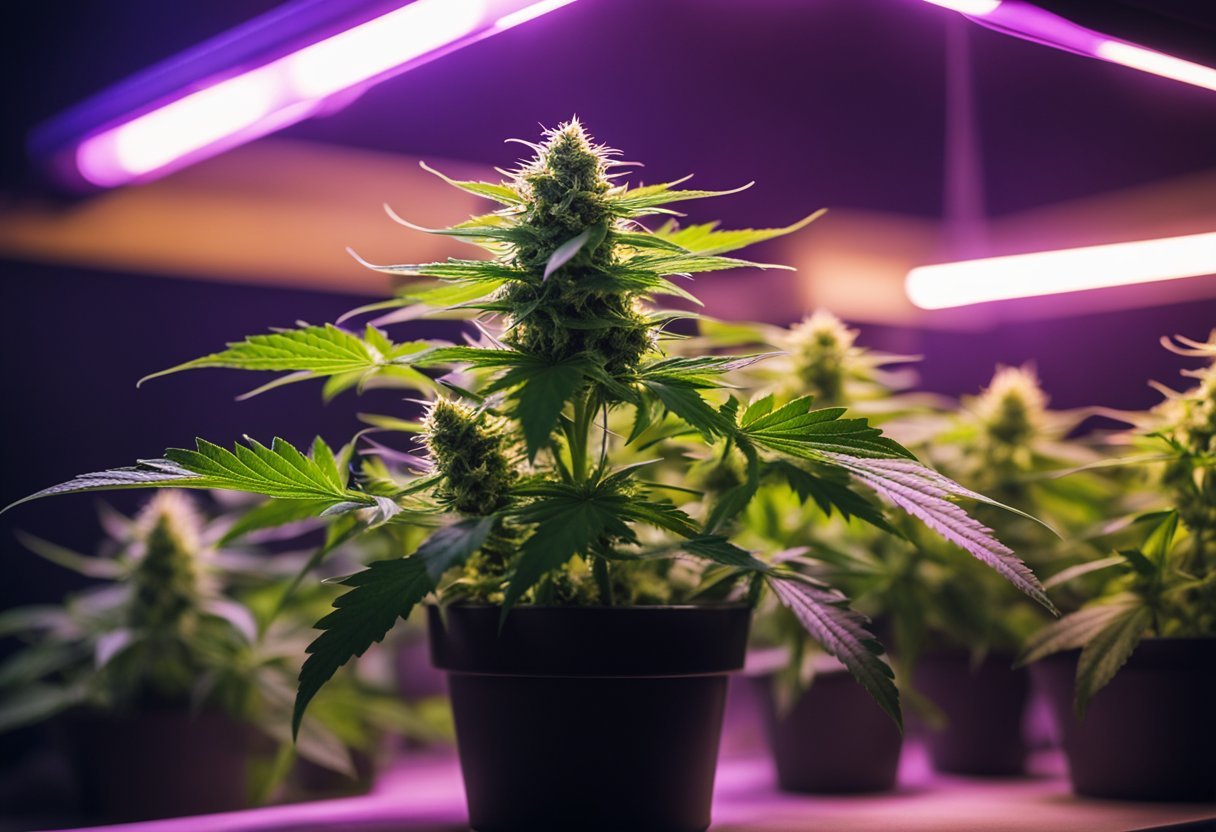
Cannabis plants require specific light conditions to achieve optimal growth and maximum yields. Light spectrum and intensity directly impact photosynthesis, plant development, and cannabinoid production.
Essential Light Spectrum for Cannabis Growth
Plants respond most strongly to red and blue wavelengths during different growth stages. During vegetative growth, blue light (400-500nm) promotes compact growth and thick leaf development. Red light (620-780nm) drives flowering and bud production.
UV light exposure can increase trichome production and boost cannabinoid levels. IR light helps regulate plant growth and flowering cycles.
Full-spectrum lighting provides the complete range of wavelengths needed throughout the growing cycle. This mimics natural sunlight and supports healthy development from seedling to harvest.
The Importance of Light Intensity and Coverage
Light intensity decreases as distance from the source increases. Cannabis plants need 30-70 watts per square foot of growing space for optimal results.
The coverage area depends on the light’s power and mounting height. Proper height adjustment prevents light burn while ensuring adequate intensity reaches all parts of the plant.
Light meters help growers measure PAR (Photosynthetically Active Radiation) at the canopy level. Maintaining 400-600 PPFD during vegetation and 600-900 PPFD during flowering optimizes growth.
Even light distribution prevents shadowing and ensures uniform plant development. Reflective walls and proper spacing between plants maximize light usage efficiency.
Comparing LED, HPS, and CFL Grow Lights
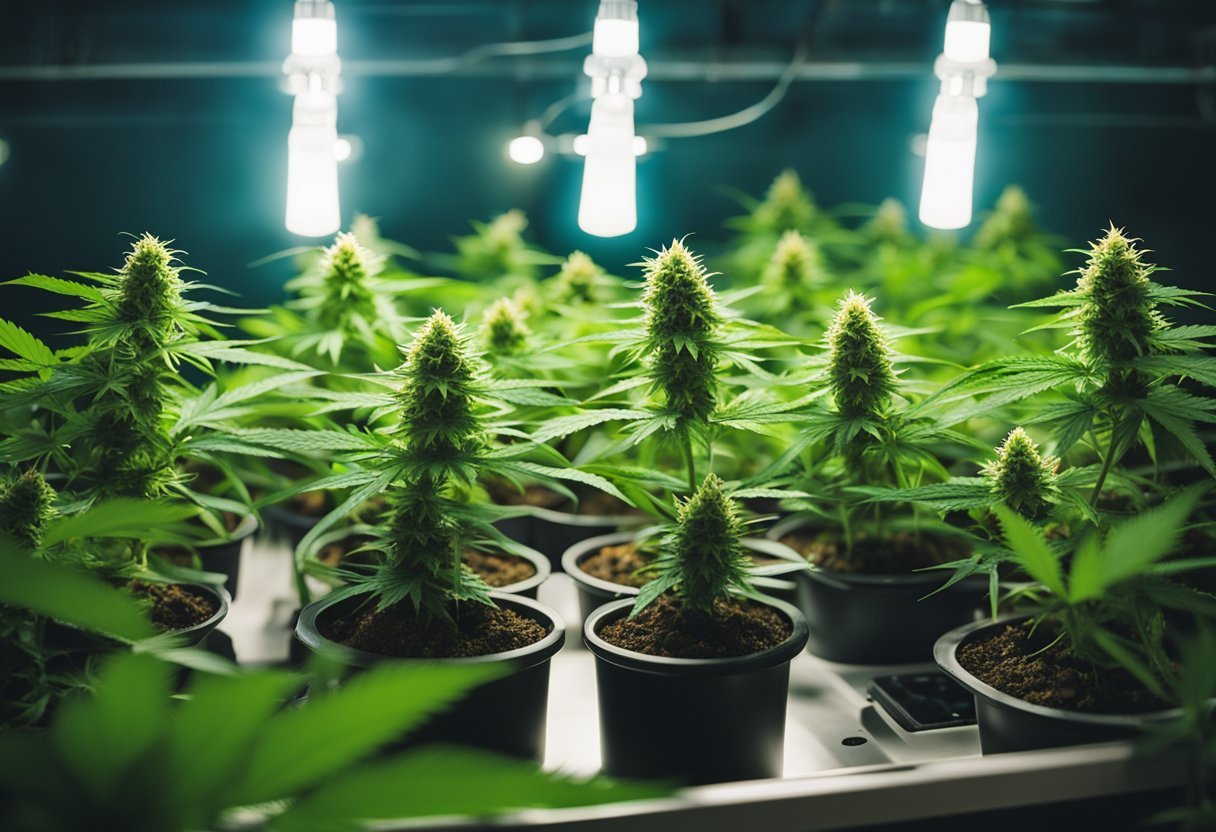
Modern cannabis cultivation demands efficient lighting solutions that balance energy consumption, heat output, and spectral quality. Each lighting technology offers distinct advantages for different growing scenarios and budgets.
LED Grow Lights: Spectrum Control and Energy Efficiency
LED grow lights consume 40-60% less electricity than traditional options while producing minimal heat. A typical 600W LED fixture draws around 260W of actual power.
The customizable spectrum allows growers to adjust light wavelengths for different growth stages. Blue light (400-500nm) promotes vegetative growth, while red light (620-780nm) enhances flowering.
LED fixtures last 50,000+ hours compared to 10,000-24,000 hours for other types. The long lifespan offsets their higher upfront cost of $500-1500 for a quality unit.
Modern LED arrays provide uniform light distribution and can be positioned closer to plants without burning. Most units include built-in cooling fans and heat sinks.
HPS Grow Lights: High Yield and Wide Coverage
HPS lights remain popular for their proven yields and excellent canopy penetration. A 600W HPS bulb generates around 90,000 lumens of intense light.
These fixtures create an ideal spectrum for the flowering phase with abundant red and orange wavelengths. One 600W HPS can effectively cover a 4×4 foot growing area.
The high heat output requires proper ventilation and cooling systems. HPS bulbs typically need replacement every 12-18 months of use.
Setup costs are moderate at $150-300 for a complete system. Operating costs are higher due to greater power consumption and cooling needs.
CFL Grow Lights: The Cost-Effective Choice for Small Grow Spaces
CFLs work well for small grows and tight budgets. Entry-level systems start at $50-100 for basic coverage.
These bulbs run cool and fit standard light sockets. A mix of 2700K (warm) and 6500K (cool) CFLs provides a balanced spectrum.
Space requirements are minimal, making CFLs ideal for closet grows and micro gardens. Each 23W CFL should be placed 2-4 inches from plant tops.
The main trade-off is limited light penetration. Growers need multiple bulbs to match the output of larger systems.
Factors Influencing Grow Light Performance and Selection
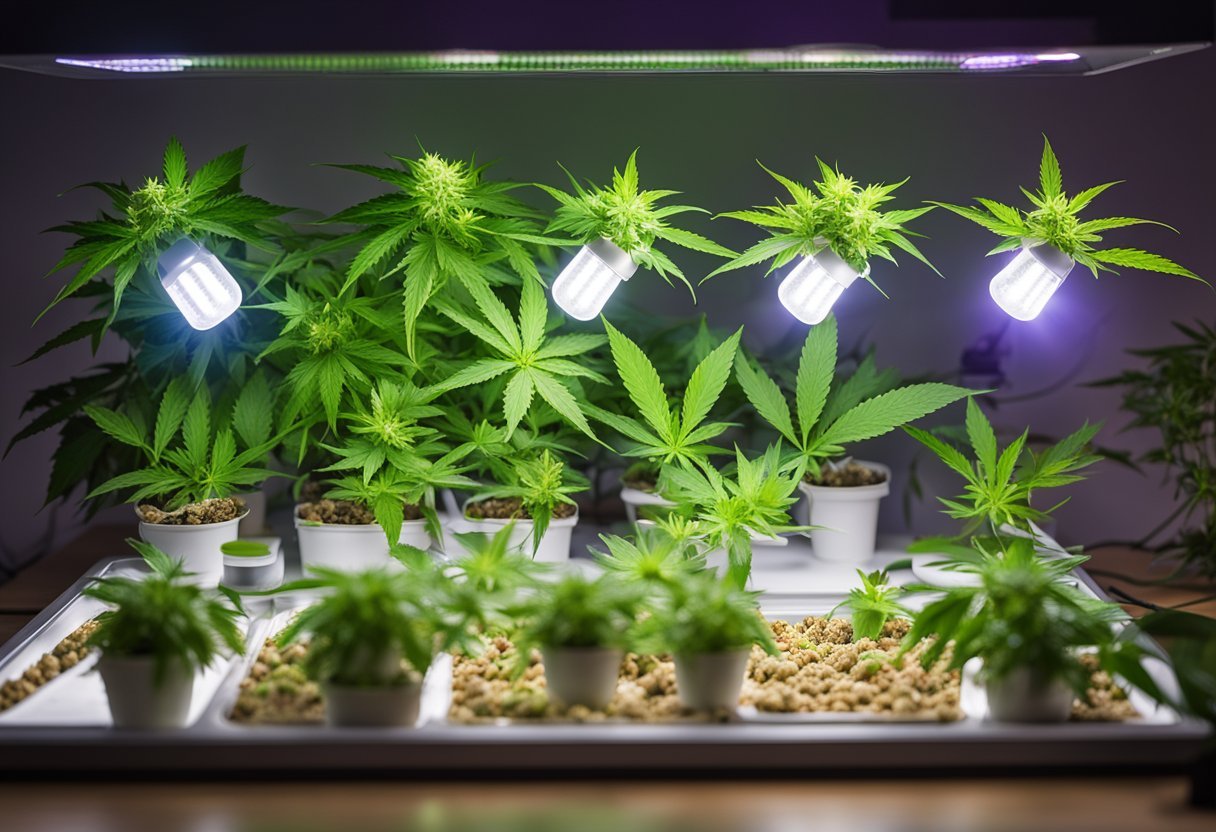
Light selection impacts both cultivation success and operational costs in cannabis growing. Quality, efficiency, and environmental control directly affect plant health and harvest yields.
Heat Output and the Need for Proper Ventilation
Different grow lights produce varying levels of heat that affect grow room temperatures. LED lights generate 75% less heat than HPS systems, reducing cooling requirements.
Proper ventilation becomes crucial with HPS lights, which can raise room temperatures by 10-15°F. A 1000W HPS system typically needs a 400-600 CFM exhaust fan for adequate cooling.
Temperature control systems must match the heat output of chosen lights. HPS setups often require dedicated air conditioning units, while LED systems can operate with basic ventilation.
Optimal Growing Temperature Range:
- Vegetative stage: 70-85°F
- Flowering stage: 65-80°F
Assessing the Impact of Initial Cost, Maintenance, and Operational Expenses
LED systems have higher upfront costs, ranging from $500-1500 for quality 1000W equivalent units. HPS systems typically cost $200-400 for similar coverage.
The lifespan of LED lights extends to 50,000+ hours compared to 10,000-24,000 hours for HPS bulbs. HPS systems require bulb replacement every 3-4 growth cycles.
Energy consumption creates significant cost differences:
- LED: 400-600W actual draw
- HPS: 1000W + 15-20% ballast draw
Monthly electricity costs for a 1000W equivalent system:
- LED: $45-65
- HPS: $90-120
Best Practices for Optimizing Cannabis Growth with Grow Lights
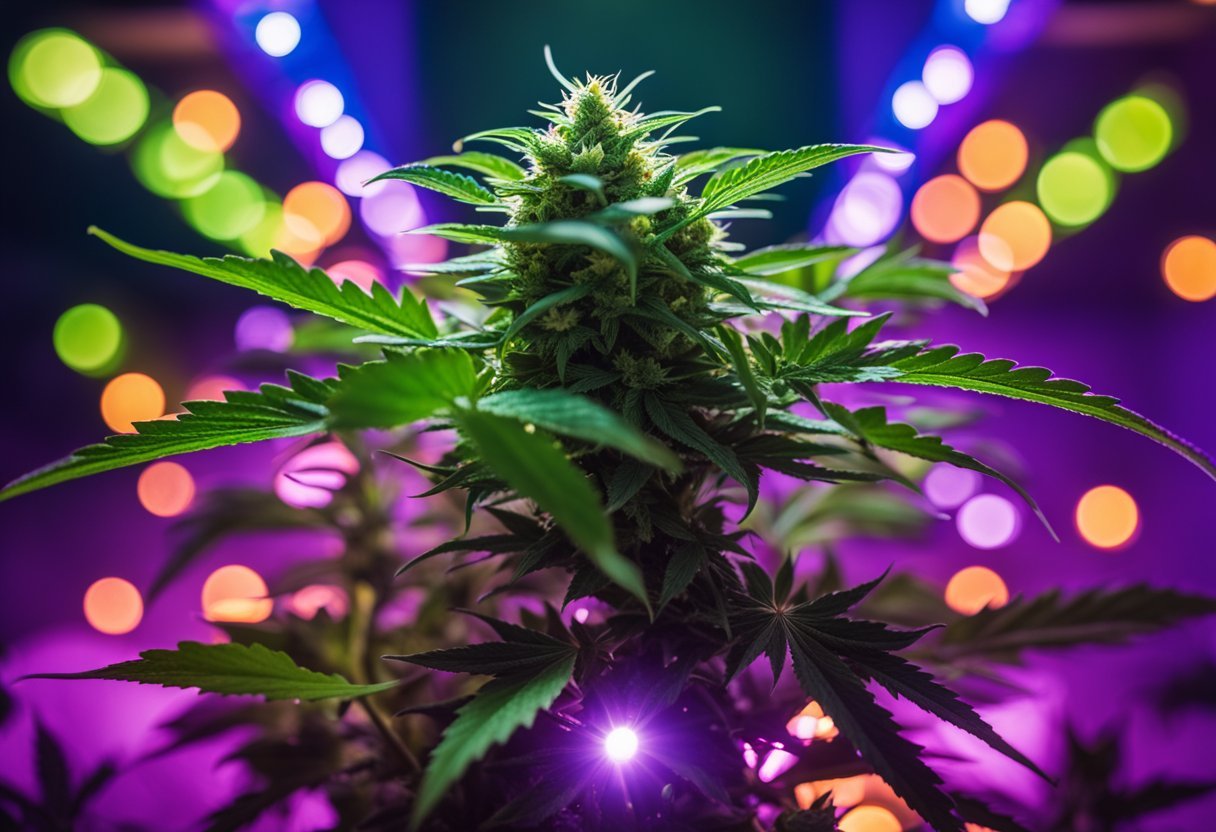
Proper light setup and management significantly impacts cannabis yield and potency. Strategic positioning of grow lights combined with careful attention to flowering stages creates optimal growing conditions.
Setting Up Your Grow Room for Maximum Efficiency
Mount LED fixtures 12-24 inches above the canopy to prevent light burn while maintaining intensity. This distance varies based on the specific model and wattage.
The grow room requires reflective materials on walls to maximize light distribution. White or mylar surfaces reflect up to 95% of light back to plants.
Essential Setup Components:
- Light meters to monitor PAR/PPFD levels
- Timers for consistent light schedules
- Adjustable light hangers
- Proper ventilation system
Temperature control becomes crucial with artificial lighting. Maintain 70-85°F (21-29°C) during light periods and slightly cooler during dark periods.
Maximizing Plant Growth and Potency During Flowering Stages
Full-spectrum lighting proves essential during the 12/12 light cycle of the flowering stage. Plants require increased red spectrum light (660nm) to develop dense buds.
Light Schedule Guidelines:
- Vegetative: 18-24 hours light
- Flowering: 12 hours light/12 hours dark
- Intensity: 600-900 PPFD for mature plants
Monitor plants for light stress signs such as leaf curling or bleaching. Adjust height or intensity accordingly.
Supplement with UV-B lighting during the final 2-3 weeks of flowering to boost trichome production and enhance potency.
Emerging Trends and Future of Grow Lighting Technology in Cannabis Cultivation
Adaptive LED systems represent the next evolution in cannabis grow lights. These smart systems automatically adjust spectrum and intensity based on plant growth stages and environmental conditions, optimizing energy usage while maximizing yields.
Quantum dot technology is emerging as a promising advancement for commercial growers. This innovation enables precise wavelength control, delivering exactly the light spectrums cannabis plants need for different growth phases.
The integration of artificial intelligence with horticulture lighting groups has begun transforming greenhouse grows. AI-powered systems can predict plant needs and adjust supplemental lighting in real-time, reducing energy costs by 25-30%.
Vertical farming solutions are gaining traction in indoor gardens. New low-profile LED arrays enable multi-tier growing systems, significantly increasing production capacity per square foot.
Key Technological Advances:
- UV-C sterilization integration
- Solar-powered supplemental lighting systems
- Wireless mesh networking for light control
- Plant-specific spectrum customization
- Heat management innovations
Research indicates microLED technology will revolutionize cannabis grow lights within 5-7 years. These ultra-efficient lights offer superior control over traditional LEDs while consuming less power.
Photobiology sensors are becoming standard in commercial cultivation. These devices monitor plant responses to light in real-time, enabling growers to fine-tune their lighting strategies for optimal growth.